2026-11-21 ·
Monsoon Season Water Damage Prevention in Phoenix Homes
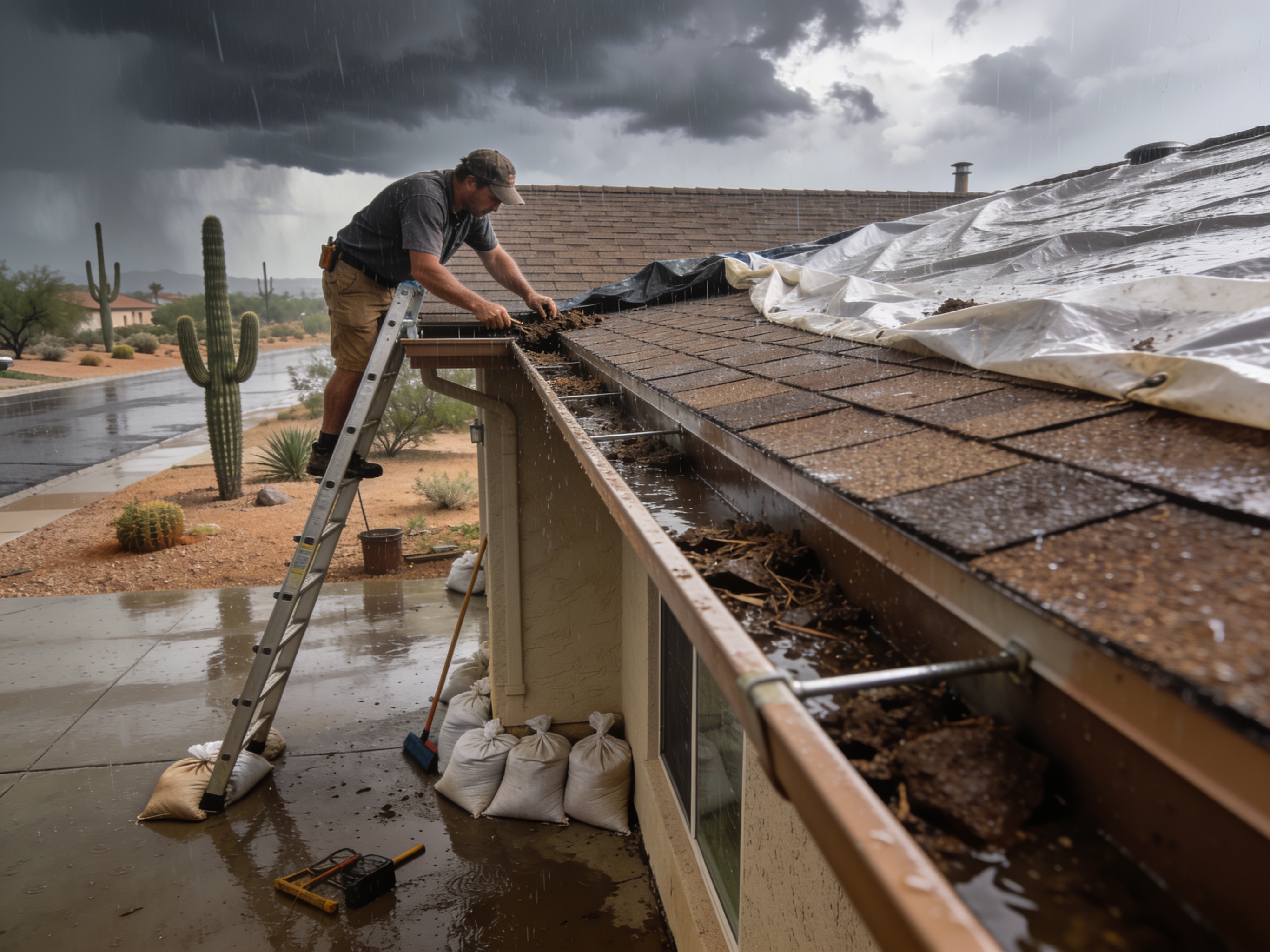
Effective monsoon season water damage prevention in Phoenix homes begins with a full roof inspection and foundation grading check before July rains arrive, cutting the chance of interior leaks from sudden downpours that drop 1–2 inches in an hour across Maricopa County.
Inspecting Roofs and Attics Ahead of Monsoon Season
Phoenix homes in Arcadia and Biltmore often feature tile or flat roofs installed 15–30 years ago that develop cracked seals around vents and skylights. Walk the roof in early June and look for missing tiles, ponding water, or separated flashing. Inside the attic, shine a light along rafters for dark stains or soft spots that signal prior seepage. Clear debris from scuppers on flat roofs common in Camelback East to stop water from backing up under the membrane. These checks take one afternoon yet prevent water from reaching insulation or drywall once monsoon cells stall over the city. Homes near Papago Park see extra wind-driven rain that tests every seam, so replace any deteriorated mastic while temperatures remain under 100 degrees.
Improving Yard Grading and Foundation Drainage
Many older properties in Maryvale and South Mountain sit on lots where original grading has settled, directing monsoon runoff toward stucco walls and slab edges. Walk the perimeter after a test hose run and confirm soil slopes away at least 6 inches over the first 10 feet. Add or reshape river rock swales along the foundation in Ahwatukee where clay-heavy soil holds moisture against concrete. Keep irrigation valves and drip lines 12–18 inches from the house so overspray does not saturate the soil during the 105-degree days that precede storms. Proper grading stops water from entering through weep holes or under door thresholds, a common failure point when 30-minute cloudbursts hit Tempe and Mesa at the same time.
Clearing Gutters, Downspouts, and Window Wells
Phoenix downspouts clog quickly with palm fronds and dust between May and July, so clean them the first week of June and again after the first monsoon cell passes. Extend downspout extensions at least 5 feet from the foundation in Biltmore neighborhoods where lots are narrow. Check window wells for standing water and install covers rated for 40 pounds per square foot to keep debris out. In Scottsdale and Tempe, where many homes back up to washes, verify that French drains or channel drains remain unobstructed so flow moves toward street curbs instead of pooling against retaining walls. These steps keep water moving away from the structure during the 2–4 inch events that can occur in a single afternoon.
Planning for Flash Floods and Emergency Response
Low-lying streets near the Phoenix Zoo and Desert Botanical Garden flood fast when monsoon runoff exceeds storm drains, so identify the nearest high ground and move vehicles before warnings are issued. Keep a battery-powered wet vac and shop towels on hand for minor entry points around sliding doors. If water does enter, contact professionals for emergency water extraction within the first 24 hours to limit secondary damage. Review the factors that affect drying times after local storms in this related post: What Influences Water Damage Drying Costs After Local Storms. For full water damage restoration in Arcadia or surrounding neighborhoods, crews familiar with Maricopa County housing stock arrive ready with the right equipment. Sure Dry Phoenix is open Mon–Fri 8am–6pm and Sat 9am–2pm to answer questions before the next storm cell forms.