2026-11-21 ·
How Extreme Heat Affects Plumbing and Causes Leaks in Arizona
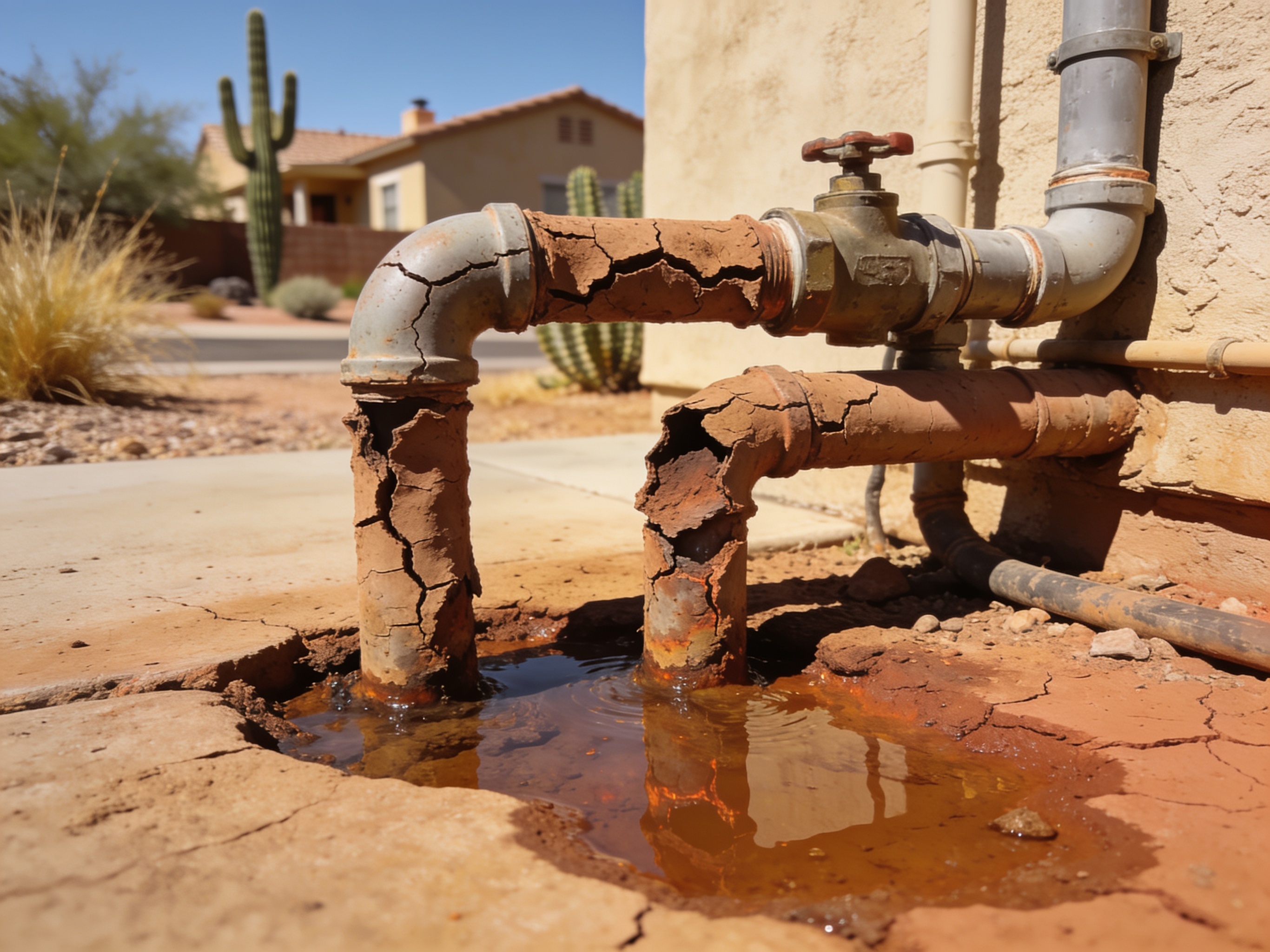
Phoenix's extreme summer heat regularly pushes daytime temperatures above 110°F, causing metal and plastic pipes to expand during the day and contract at night; this cycle loosens soldered joints and threaded connections, producing pinhole leaks and fitting failures within 8–12 years in many homes.
Pipe Expansion Mechanics in Desert Conditions
Copper supply lines in homes built before 1990 in Biltmore and Arcadia experience the most movement because copper conducts heat quickly and expands roughly 0.001 inches per foot for every 10°F rise. Homeowners notice small drips at elbows behind walls after several consecutive weeks above 105°F. PVC drain lines under slabs in Ahwatukee shift less but still develop stress cracks where they exit the foundation into hotter garage spaces. The same temperature swings affect homes in Camelback East where irrigation lines run close to south-facing walls that absorb extra radiant heat from the desert floor.
Common Leak Points Triggered by Heat
Water heater supply valves fail first because the 40- to 50-gallon tanks already sit at 120°F and the incoming water from street mains warms another 15–20°F during peak summer afternoons. Shower valves in Maryvale tract homes from the 1970s develop stem leaks when the cartridge bodies expand against older brass seats. Outdoor hose bibs on south and west walls crack near the shutoff because the bib body reaches surface temperatures near 140°F while the buried line stays cooler. Slab leaks appear more often in South Mountain properties where soil temperatures under the slab stay elevated and reduce the pipe's ability to dissipate heat.
Interaction with Monsoon Humidity Spikes
When monsoon moisture arrives after weeks of dry heat, the sudden 20–30% jump in relative humidity adds condensation on cooler return lines inside attics; this moisture combines with heat-expanded joints that have already lost their seal, turning slow drips into active leaks that reach drywall within hours. Readers can review seasonal patterns in the related post Monsoon Season Water Damage Prevention in Phoenix Homes.
Practical Monitoring Steps for Local Homeowners
Check accessible shutoff valves monthly during June through September by feeling for moisture at the packing nut. Listen for hissing behind access panels after 3 p.m. when attic temperatures peak. Note any unexplained rise in the monthly water bill of more than 10% during the hottest months. Homes in Tempe and Mesa share the same Maricopa County water chemistry, so the same expansion issues appear there when supply temperatures climb.
When Heat-Related Leaks Require Professional Extraction
Once a joint fails, water can migrate under tile or into insulation within 24 hours in Phoenix's low-humidity air that masks the problem until staining appears. Properties needing rapid removal benefit from Emergency Water Extraction crews familiar with local slab construction. Follow-up drying costs vary based on how far moisture travels; see the post What Influences Water Damage Drying Costs After Local Storms for factors that apply to heat-driven leaks as well.
Sure Dry Phoenix operates Monday through Friday 8am–6pm and Saturday 9am–2pm to respond when these heat-induced failures occur.