Phoenix homes in neighborhoods like Arcadia and Biltmore often feature older stucco construction with slab foundations that trap moisture from roof leaks or AC condensate lines. Once temperatures climb past 110 degrees, even small water intrusions behind drywall or in attics can trigger rapid mold colonies that standard fans cannot reach. Technicians must map HVAC returns and supply runs because cooled air moving through metal ducts frequently spreads spores into living spaces before homeowners notice musty odors near vents.
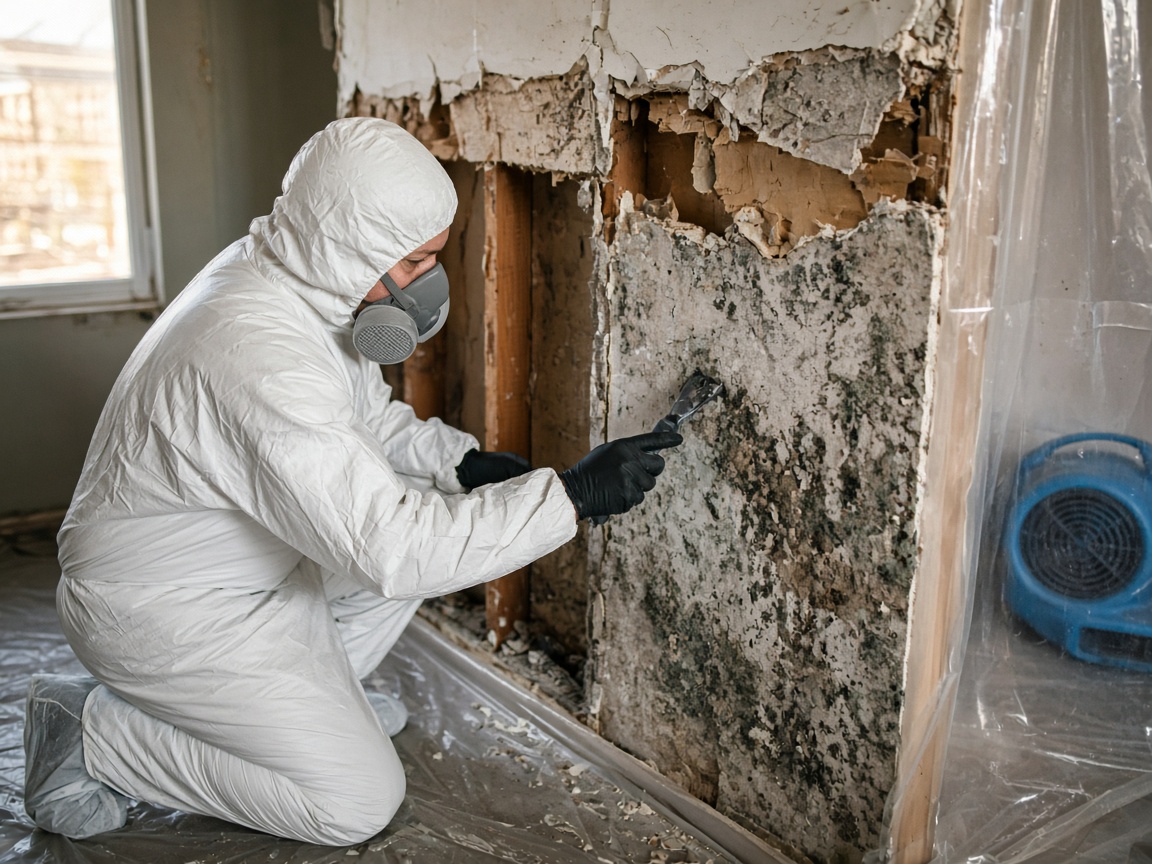
Maricopa County properties in Maryvale and South Mountain frequently have flat roofs and shared walls that channel monsoon runoff into wall cavities. Removing affected drywall requires negative-air machines and sealed containment to prevent cross-contamination into adjacent rooms, especially when summer heat forces crews to work during early morning hours before surfaces reheat. Failure to address the source, such as a clogged scupper or cracked stucco, allows regrowth within weeks regardless of surface cleaning.
Remediation stops only after moisture readings on joists and sheathing drop below 12 percent and air samples confirm spore counts match outdoor baselines. In Camelback East homes with limited crawl space access, crews often pull baseboards and drill inspection ports rather than demolish entire walls. This targeted approach limits disruption while still meeting Arizona Registrar of Contractors expectations for documentation on every job.
Technician insight
In Phoenix, the thing that catches most people out with Mold Remediation is how extreme summer heat keeps attic temperatures above 130 degrees, so any moisture left behind after a leak dries fast on the surface but stays trapped inside insulation or behind stucco in homes built before 1990 in Maryvale and South Mountain.
Hidden Mold Behind AC Closet in Biltmore
A homeowner in Biltmore noticed a musty smell near the guest room after the AC ran nonstop through July. Inspection found the condensate line had dripped inside the closet wall for weeks. Crews removed two sheets of drywall, treated the studs, and cleaned the handler before reinstalling with new insulation. Clearance testing passed and the odor did not return.
Mold Remediation Services We Offer
✓AC Condensate Mold Remediation
Removes mold colonies inside air handlers and drain lines common in Phoenix homes where constant cooling creates standing water in the desert heat.
✓Attic Mold Removal
Treats mold growth on rafters and insulation caused by roof leaks in flat-roof homes across Arcadia and Ahwatukee.
✓Drywall and Insulation Replacement
Cuts out and replaces saturated drywall and insulation behind which mold has established in older Biltmore and Maryvale construction.
✓Crawl Space Mold Treatment
Addresses mold on pier-and-beam structures or under raised additions where poor ventilation meets occasional irrigation leaks.
✓HVAC Duct Cleaning After Mold
Cleans and sanitizes supply and return ducts that have carried spores from a water event into multiple rooms.
How it works
- 1
Moisture Mapping And Containment
Technicians use meters to locate all wet materials and set up negative pressure barriers before any demolition begins.
- 2
Source Correction
Plumbing or roof issues are documented and turned over to the homeowner's contractor so the mold does not return.
- 3
Removal And Disposal
Affected materials are bagged and removed while HEPA filtration runs continuously to protect remaining surfaces.
- 4
Drying And Clearance Testing
Dehumidifiers and air movers bring moisture levels down, followed by third-party air sampling before barriers come down.
Pricing
Cost depends on square footage affected, access difficulty, and whether HVAC components require cleaning.