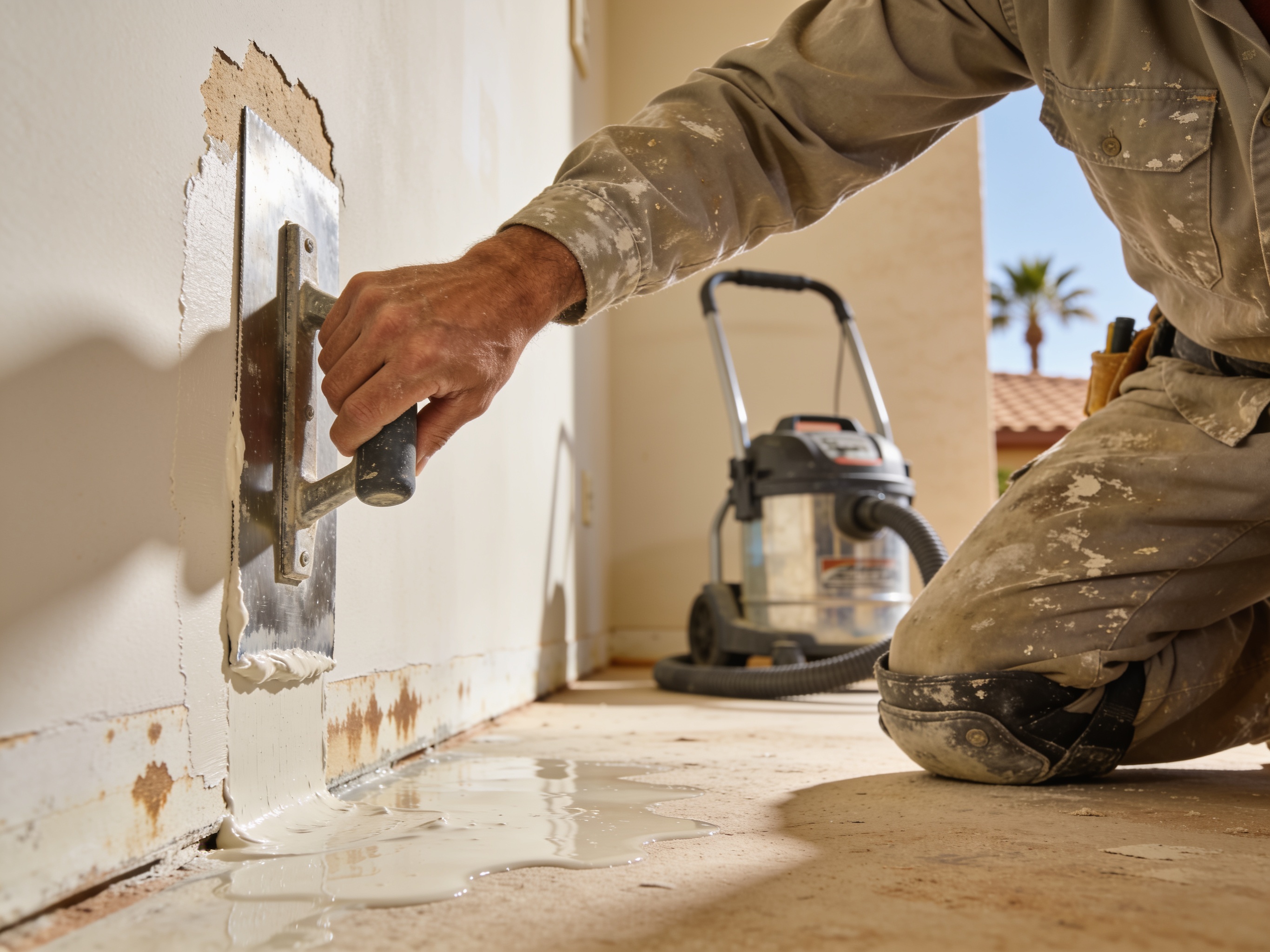
Phoenix summers push indoor temperatures past 110 degrees, which accelerates hidden moisture migration through drywall in homes built before 1990 in Maryvale and South Mountain. Technicians map moisture with infrared cameras to locate saturation behind textured walls without unnecessary demolition. Removing only the affected sections prevents the spread of gypsum breakdown that occurs when paper facing stays damp for more than 48 hours in low-humidity air.
Older Camelback East and Arcadia properties often contain multiple layers of drywall over original plaster, creating pockets where water travels upward along seams. Replacement must match existing texture and thickness to satisfy Maricopa County building standards during insurance inspections. Technicians install new moisture-resistant board in wet zones such as laundry rooms and use anti-microbial primer before texture and paint to reduce future staining.
Monsoon-driven roof leaks around Papago Park and near Chase Field frequently affect vaulted ceilings where access requires scaffolding. Edge cases include water that reaches HVAC returns, requiring coordination with HVAC contractors before drywall closure. Proper sequencing avoids trapped moisture that later causes bubbling under new finishes once the extreme heat returns.
Repair in Tempe and Mesa tract homes built on slab foundations demands attention to base plates and bottom plates that wick water from minor flooding. Technicians cut at least 12 inches above the water line and document each step with photos for claims adjusters serving Scottsdale and Mesa.
Technician insight
In Phoenix, the thing that catches most people out with Drywall Water Damage Repair is how fast the extreme summer heat drives moisture upward into multiple drywall layers in pre-1980 homes in Maryvale and South Mountain before any visible signs appear on the surface.
Hidden Saturation Behind Layered Drywall
A homeowner in Camelback East noticed a faint stain after a July monsoon roof leak. Inspection revealed water had traveled between two drywall layers installed during a 1995 remodel. We removed the outer layer, treated the framing, installed new moisture-resistant board, and matched the original texture so the repair blended with the rest of the room.
Drywall Water Damage Repair Services We Offer
✓Moisture Mapping and Assessment
Infrared scanning locates hidden saturation in walls and ceilings of Phoenix homes before any cutting begins.
✓Water Damaged Drywall Removal
Selective demolition removes only saturated sections while protecting undamaged surfaces in older Arcadia and Biltmore properties.
✓Mold Prevention Treatment
Application of EPA-registered antimicrobials to framing and new drywall edges stops growth accelerated by summer heat.
✓Texture and Paint Matching
Replication of original knockdown or orange-peel textures found in South Mountain and Maryvale homes for seamless repair.
✓Ceiling Drywall Repair
Scaffold work restores vaulted and tray ceilings damaged by roof leaks common near Papago Park and the Phoenix Zoo.
How it works
- 1
Initial Inspection
Technicians document all affected drywall using moisture meters and photos in the specific neighborhood.
- 2
Water Extraction And Drying
Air movers and dehumidifiers run until readings reach manufacturer drying standards for Phoenix climate.
- 3
Selective Removal
Damaged sections are cut out above the saturation line while preserving sound material.
- 4
New Drywall Installation
Moisture-resistant board is hung, taped, and finished to match existing surfaces.
- 5
Final Paint And Cleanup
Texture, primer, and paint restore the wall while the site is left clean for homeowner return.
Pricing
Cost depends on square footage affected, number of layers, and whether ceiling work or texture matching is required.